 Protek Pest Services
Found a Line of Dried Mud on Your Wall? That’s Probably a Termite Trail
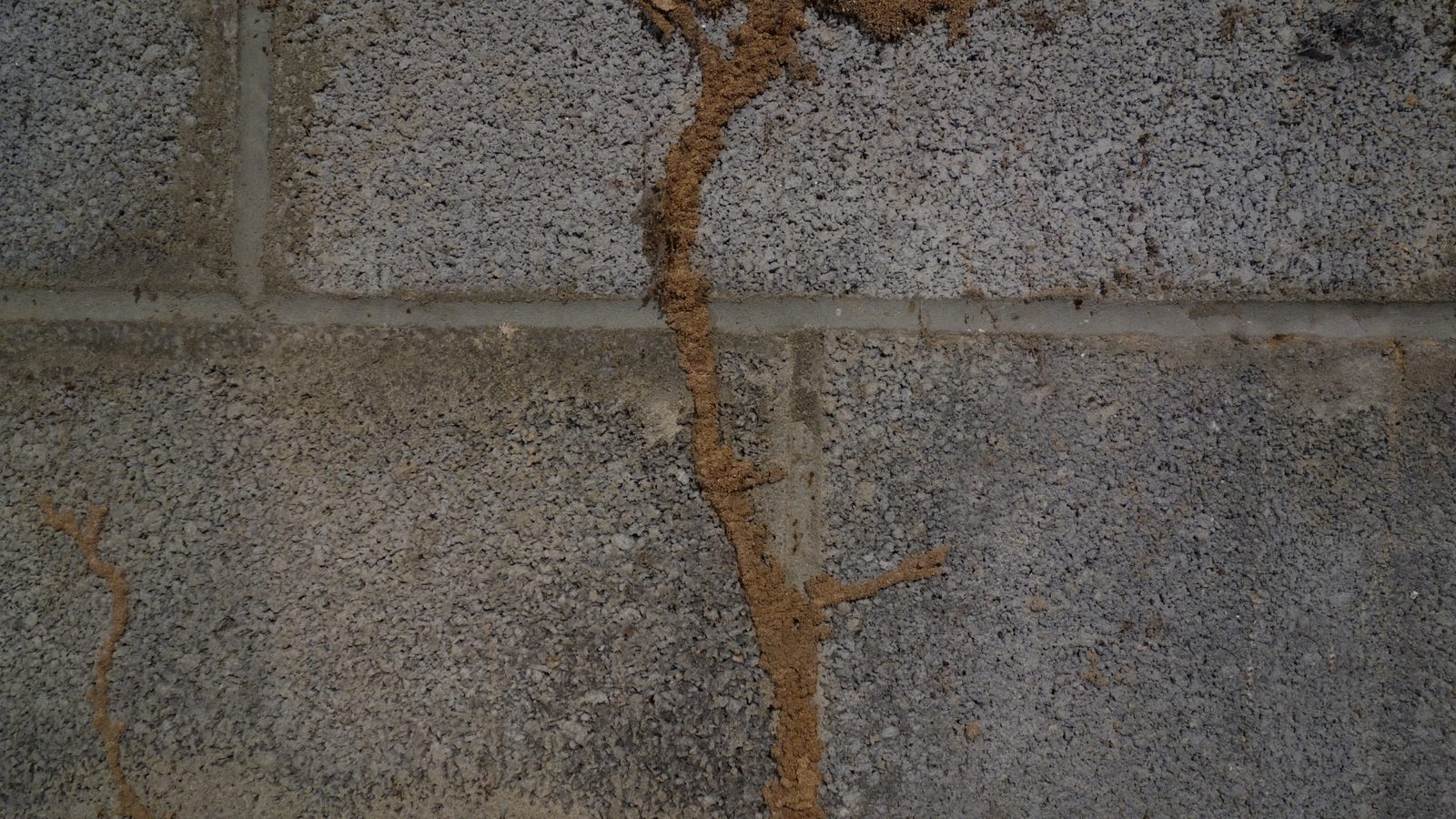
Termite mud tubes climbing a concrete block wall.
What a termite trail looks like
Termite trails, also called mud tubes or shelter tubes, are easy to miss until you know what to look for. Here is what people usually describe:
- Thin and winding: about as wide as a pencil, sometimes wider where several tubes join.
- Made of dried mud: brown or tan, rough and crusty, built from soil mixed with termite saliva and bits of wood.
- Running up from the ground: along concrete block walls, foundation edges, piers, pipes, door frames and slab joints.
- Sometimes branching: a main tube can split into smaller tubes that lead toward timber.
- Hollow inside: if a section breaks open, you may see tiny pale insects moving inside.
What it probably is
In most cases, a mud tube like this is a sign of subterranean termites. These termites live in the soil and need moisture, so they build tubes to cross open surfaces such as concrete and block without drying out or being exposed. The tube is their protected highway between the colony underground and a food source, usually wood.
Could it be something else?
- Mud dauber wasp nests: these are usually clumps of small cylinders, like tiny organ pipes, stuck to a wall. They are not long winding trails.
- Dirt or splash marks: these are flat stains, not raised tubes.
- Drywood termites: these do not build mud tubes. Their sign is tiny, hard, six-sided pellets (called frass) that collect below infested wood, often near windows, frames or furniture.
Only an inspection can confirm the type of termite and how active they are, so a photo and a professional look is the safest way to know for sure.
The damage termites do
Termites eat cellulose, the material in wood, paper and cardboard. They usually eat from the inside out, which is why the damage can go unnoticed for a long time while the surface looks fine. Over time this can cause:
- Wood that sounds hollow or papery when you tap it.
- Blistering, bubbling or peeling paint on walls and wood.
- Doors and windows that start to stick or warp.
- Soft, sagging or uneven floors.
- Damaged roof timbers, door frames, skirting boards, cabinets and furniture.
- Weakened structural timber, which can lead to expensive repairs.
For restaurants, hotels, villas, rentals and other commercial properties, termite damage can also mean closed rooms, repair bills and unhappy guests. The longer a colony goes untreated, the more it can spread.
When you should call a pest control company
You don’t need to wait for visible damage. Call as soon as you notice any of these:
- Mud tubes on a wall, foundation, pillar or pipe.
- Winged insects (swarmers) indoors, or small piles of discarded wings near windows and doors.
- Tiny wood-colored pellets collecting on a floor, windowsill or shelf.
- Wood that sounds hollow, crumbles when probed, or has blistered paint.
- You are buying, renting or taking over a property and want it checked first.
- You manage a business or rental and want a regular preventative check.
What happens at an inspection
A technician checks the outside and inside of the property, looks for mud tubes, frass, damaged wood and moisture problems, and works out where the termites are coming from. From there you get a clear explanation of what was found and a recommended treatment plan. Protek Pest Services offers a free, no-obligation inspection across St. Kitts & Nevis.
Frequently asked questions
Are mud tubes always active?
Not always. A tube can be old and empty. The only reliable way to know is to have it checked, because active termites may be hidden elsewhere in the property.
Can termites be in my property without any mud tubes?
Yes. Drywood termites do not build mud tubes, and subterranean termites can travel inside walls and timber where you can’t see them. That is why hollow wood, pellets and swarmers matter too.
Does termite control have to be done right away?
The sooner the better. Termites keep feeding, so waiting gives them more time to damage wood and spread through a property.
Do you inspect commercial properties?
Yes. We serve homes, apartments, resorts, restaurants, bars and commercial properties across St. Kitts & Nevis.
Think you’ve found a termite trail?
Take a photo and send it to us, or book a free inspection. We’ll find where they’re coming from and stop them.